
FedEx Life Sciences: Navigating the Complexities of Global Pharmaceutical Logistics with Enhanced Visibility
FedEx's launch of a dedicated life sciences organization signals a strategic pivot towards specialized, high-value logistics. This move addresses the escalating complexity in moving critical healthcare products globally, impacting supply chain flows, financial dynamics, and underscoring the vital role of advanced visibility platforms like MGS in ensuring product integrity and operational efficiency.
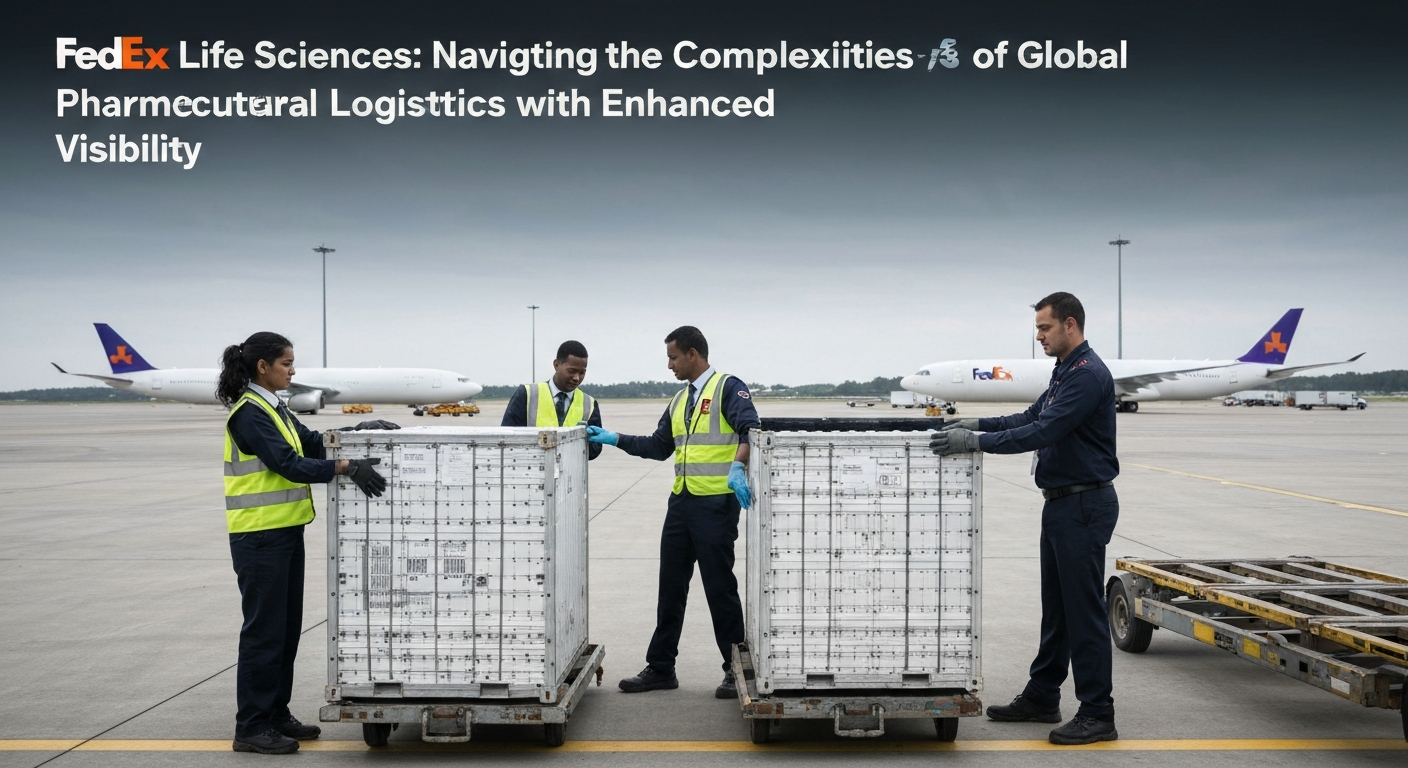
How this impacts the global supply chain
FedEx's strategic announcement regarding the establishment of FedEx Life Sciences, a dedicated organization, marks a significant development in the global logistics landscape, particularly for high-value, sensitive cargo. This move directly addresses the "increasingly complex movement" inherent in the life sciences sector, signaling a proactive response to evolving industry demands.
From a global supply chain perspective, this initiative is poised to refine and specialize existing operational paradigms rather than fundamentally alter geographical trade routes. Firstly, regarding flows, the creation of a dedicated entity implies the development of highly specialized, often segregated, logistics streams for pharmaceuticals, biologics, medical devices, and research materials. This could involve enhanced cold chain networks, stricter temperature-controlled environments, and specialized handling protocols that minimize human intervention and environmental exposure. Such dedicated flows are designed to ensure product integrity and regulatory compliance, reducing the risk of spoilage or contamination that is critically important for life-saving products. This specialization will likely lead to more streamlined and predictable movement patterns for life sciences goods within FedEx’s extensive global network.
In terms of routes, while FedEx already operates a vast global network, the dedicated life sciences organization suggests an optimization and prioritization of specific routes and hubs. This could mean leveraging strategic gateways equipped with advanced cold chain infrastructure, minimizing transshipment points, or prioritizing direct flights for time-sensitive shipments. The focus will be on speed, reliability, and maintaining specific environmental conditions throughout transit, which may influence the choice of specific air cargo lanes or ground routes. It's not about creating entirely new pathways across continents, but rather about refining and fortifying the existing arteries of trade to better serve the unique demands of life sciences cargo.
Regarding capacity, the establishment of a dedicated organization implies a strategic allocation and potential enhancement of specialized resources. This includes investing in more temperature-controlled vehicles, advanced cold storage facilities at key logistics hubs, and specialized packaging solutions. Furthermore, it involves dedicating human capital – highly trained personnel proficient in handling sensitive biological materials, navigating complex regulatory frameworks, and operating specialized equipment. While this might not dramatically increase FedEx's overall general cargo capacity, it significantly boosts its specialized capacity for life sciences, making existing assets more effective and purpose-built for this high-stakes sector. This dedicated capacity ensures that the growing volume and complexity of life sciences shipments can be handled without compromising service quality or regulatory adherence.
Finally, operations will see the most profound impact. FedEx Life Sciences will likely implement enhanced standard operating procedures (SOPs) tailored to the stringent requirements of the pharmaceutical and biotech industries. This includes advanced real-time monitoring technologies for temperature, humidity, and location, robust security protocols to prevent theft or tampering, and comprehensive contingency planning for disruptions. The focus will be on end-to-end visibility, meticulous documentation for audit trails, and specialized customer service teams with deep industry knowledge. This operational refinement aims to elevate service levels, minimize risks, and provide unparalleled reliability for the global movement of critical life sciences products.
Global financial impact
The launch of FedEx Life Sciences carries significant financial and cost implications across the global trade ecosystem, influencing shippers, carriers, and the broader economic landscape. This strategic move by FedEx underscores the substantial value and growth potential within the life sciences logistics market, a sector characterized by high stakes and stringent requirements.
For shippers, primarily pharmaceutical companies, biotech firms, and medical device manufacturers, this development promises several financial benefits and cost efficiencies. The "increasingly complex movement" of life sciences products often translates into higher operational costs due to the need for specialized infrastructure, strict regulatory compliance, and the inherent risks of product degradation or loss. A dedicated organization like FedEx Life Sciences is designed to mitigate these risks. By offering specialized handling, enhanced cold chain capabilities, and robust security, shippers can expect a reduction in product spoilage, fewer regulatory non-compliance penalties, and lower insurance premiums associated with high-value, sensitive cargo. Furthermore, improved reliability and faster transit times can accelerate market access for new drugs and therapies, leading to quicker revenue generation. While specialized services may command premium pricing, the long-term cost savings derived from reduced waste, enhanced supply chain integrity, and improved time-to-market often outweigh these initial investments, ultimately boosting shippers' profitability and competitiveness.
From the perspective of carriers, specifically FedEx, this initiative represents a strategic investment aimed at capturing a larger share of a lucrative and growing market segment. The life sciences sector is known for its high-value shipments and consistent demand, making it an attractive area for specialization. By establishing a dedicated organization, FedEx positions itself as a specialized, expert provider, differentiating its services from general cargo offerings. This differentiation allows FedEx to command premium pricing for its specialized services, enhancing its revenue streams and profit margins. The investment in specialized infrastructure, technology, and personnel, while substantial, is expected to yield significant returns by attracting and retaining high-value clients who prioritize reliability, compliance, and expertise. This strategic pivot also strengthens FedEx’s brand reputation as a leader in complex logistics, fostering customer loyalty and potentially expanding its market reach into new segments of the life sciences industry.
For trade at large, the financial implications are more indirect but equally significant. Enhanced logistics capabilities for life sciences products directly facilitate global trade in critical goods such as vaccines, pharmaceuticals, medical diagnostics, and research samples. By making the movement of these complex products more efficient, reliable, and compliant, FedEx Life Sciences helps remove significant barriers to international commerce in the healthcare sector. This can accelerate the global distribution of life-saving medicines, support international clinical trials, and improve access to healthcare in remote or developing regions. Such improvements in the logistics backbone for life sciences contribute to global health initiatives, foster innovation in biotechnology, and indirectly stimulate economic growth by enabling faster product development and broader market penetration for health-related industries worldwide. The reduction of logistical hurdles can also lead to more predictable supply chains, which is crucial for global health security and economic stability in times of crisis.
How MGS can help navigate today's global trade environment
In an increasingly complex global trade environment, particularly for the sensitive and high-stakes life sciences sector, a robust shipment-visibility control tower platform like MGS becomes an indispensable tool for operators. The very essence of FedEx's new dedicated organization is to manage "increasingly complex movement," a challenge that MGS is uniquely designed to address by providing unparalleled transparency and control.
Firstly, real-time, granular visibility is paramount for life sciences logistics. MGS offers end-to-end tracking capabilities, not just of a shipment's location but crucially, of its environmental conditions. For products requiring strict temperature control, such as vaccines, biologics, or certain pharmaceuticals, MGS can integrate with IoT sensors to monitor temperature, humidity, and even shock in real-time. This level of detail directly counters the "complexity" by providing operators with an immediate, accurate picture of their cargo's status, ensuring product integrity throughout its journey. Any deviation from predefined parameters triggers instant alerts, allowing for immediate corrective action.
Secondly, MGS empowers proactive issue resolution and risk mitigation. In the life sciences supply chain, delays or environmental excursions can lead to catastrophic product loss and significant financial repercussions. With MGS, operators receive predictive alerts based on real-time data and historical patterns. If a shipment is projected to be delayed due to customs hold-ups, adverse weather, or carrier issues, MGS can flag this proactively. This enables supply chain managers to initiate contingency plans – rerouting, arranging for alternative transport, or preparing for expedited customs clearance – before the situation escalates. For sensitive life sciences products, this ability to intervene early is not just beneficial; it is critical for preventing spoilage and ensuring patient safety.
Thirdly, MGS facilitates regulatory compliance and auditability, which are non-negotiable in the life sciences industry. Every movement of a pharmaceutical product, from manufacturing to patient delivery, must adhere to strict regulatory guidelines (e.g., Good Distribution Practices - GDP). MGS automatically logs all shipment events, including timestamps, locations, temperature readings, and any deviations. This creates a comprehensive, immutable audit trail that is easily accessible for regulatory inspections and quality assurance purposes. This automated data collection and reporting capability significantly reduces the manual effort and potential for error associated with compliance documentation, ensuring that operators can demonstrate adherence to the stringent requirements governing the "complex movement" of life sciences goods.
Finally, MGS contributes to operational efficiency and continuous improvement. By aggregating and analyzing vast amounts of shipment data, MGS provides actionable insights into carrier performance, route effectiveness, and potential bottlenecks. For a dedicated organization like FedEx Life Sciences, or for any shipper utilizing their services, MGS can help optimize network design, identify underperforming lanes, and refine operational procedures. This data-driven approach allows operators to make informed decisions that lead to more reliable, cost-effective, and resilient supply chains for life sciences products, ultimately enhancing the value proposition of specialized services and navigating the inherent complexities of global trade more effectively.
Demand–supply analysis & improvement
The announcement of FedEx Life Sciences, a dedicated organization "created to support the increasingly complex movement" of life sciences products, offers a clear signal regarding the underlying demand and supply dynamics within this specialized logistics sector. The phrase "increasingly complex movement" is a strong indicator of escalating demand coupled with a recognition that existing, generalized logistics solutions are often insufficient to meet these evolving needs.
On the demand side, the complexity arises from several factors driving growth in the life sciences industry. There is a global surge in the development and distribution of highly sensitive biological products, such as advanced gene therapies, personalized medicines, and next-generation vaccines, many of which require ultra-cold chain conditions or precise temperature ranges. The global pandemic further highlighted the critical need for robust and agile cold chain logistics. Additionally, the globalization of clinical trials, the expansion of pharmaceutical markets into emerging economies, and the increasing regulatory scrutiny on product integrity all contribute to a heightened demand for specialized, compliant, and reliable logistics services. Shippers in this sector are not just looking for transport; they require end-to-end solutions that guarantee product efficacy and patient safety, driving up the complexity and specificity of their logistical requirements.
Regarding the supply side, the "increasingly complex movement" suggests that the existing supply of logistics services, while extensive, has not always kept pace with the specialized demands of the life sciences sector. General cargo networks, while efficient for many goods, often lack the dedicated infrastructure, specialized training, and stringent quality controls necessary for sensitive pharmaceuticals. This creates a gap where demand for highly specialized, compliant, and reliable cold chain and secure logistics often outstrips the readily available, purpose-built supply. FedEx's move is a direct response to this perceived gap, aiming to enhance the supply of specialized logistics solutions.
This dynamic reveals several concrete improvement levers:
- Specialization and Dedication: As FedEx has demonstrated, creating dedicated organizations or divisions is a primary lever. This allows for focused investment in specialized infrastructure (e.g., controlled-ambient warehouses, cryogenic storage), technology (e.g., real-time temperature monitoring, IoT sensors), and human capital (e.g., GDP-trained staff, regulatory experts). This specialization ensures that the supply side can meet the precise, often unique, requirements of life sciences products.
- Enhanced Cold Chain Capabilities: A significant portion of the "complexity" stems from temperature sensitivity. Improvements must focus on expanding and refining cold chain networks, including active and passive temperature-controlled packaging, refrigerated and frozen storage solutions, and reliable last-mile delivery options that maintain temperature integrity.
- Regulatory Expertise and Compliance: Navigating the patchwork of international and national regulations (e.g., FDA, EMA, GDP) is a major challenge. Improvement involves building in-house expertise, developing robust quality management systems, and ensuring seamless documentation and audit trails to guarantee compliance throughout the supply chain.
- Technology Integration for Visibility and Control: As discussed with MGS, leveraging advanced visibility platforms, predictive analytics, and automation tools is crucial. These technologies enable real-time monitoring, proactive risk management, and data-driven optimization, transforming a complex, opaque process into a transparent and controllable one.
- Partnership and Collaboration: Given the global nature of life sciences, improvement also comes from strategic partnerships between carriers, freight forwarders, and technology providers to create integrated, seamless solutions across diverse geographies and regulatory environments.
By addressing these levers, the logistics industry can better align its supply capabilities with the escalating and complex demands of the life sciences sector, ultimately supporting global health and innovation.
Source: Courier News — https://couriernews.co.uk/blog/fedex-lunches-dedicated-life-sciences-organisation/