
Strategic Air Corridor: Analyzing DHL's Bangkok-Cincinnati Service and Its Supply Chain Impact
DHL's new Transpacific air cargo service connecting Bangkok and Cincinnati signifies a strategic shift in global logistics, offering enhanced capacity and direct connectivity. This brief analyzes its far-reaching implications for supply chain flows, financial dynamics, and how advanced visibility platforms like MGS become indispensable for navigating this evolving trade landscape.
How this impacts the global supply chain
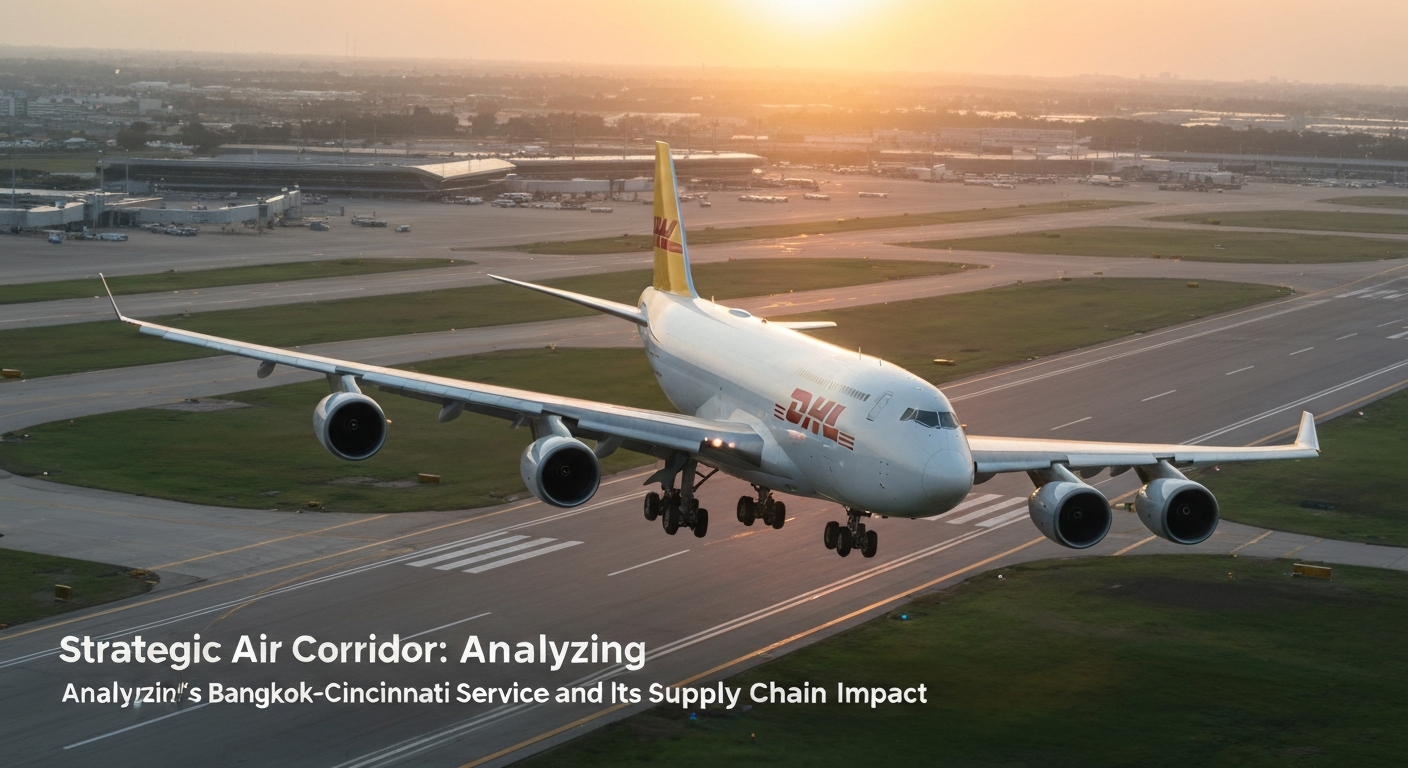
The launch of DHL Global Forwarding's TransPac Connect solution, specifically the new Bangkok (BKK) to Cincinnati (CVG) air cargo service, marks a significant recalibration of Transpacific logistics. Operating three times weekly with high-capacity wide-body freighters, each capable of carrying up to 100 tons, this development directly impacts global supply-chain flows, routes, capacity, and operational strategies. The new direct connection from Southeast Asia to the US Midwest streamlines goods movement, potentially bypassing congested gateway hubs. This facilitates faster transit times for cargo destined for the US interior, improving predictability. The inclusion of Hanoi and Taipei within the broader TransPac Connect network means shipments from these key manufacturing regions can also leverage this efficient pathway. This service establishes a prominent new artery in the Transpacific air freight network, positioning Cincinnati (CVG) as a vital US gateway with robust onward road feeder connectivity. This diversifies entry points into the US, mitigating reliance on historically dominant coastal ports. The injection of 300 tons of weekly air freight capacity addresses persistent demand for reliable solutions, particularly for time-sensitive or high-value goods, potentially stabilizing freight rates. Operationally, a dedicated service means predictable schedules and fewer handling points, reducing risk of damage and enhancing visibility. The integrated road feeder network simplifies the logistics chain, offering a seamless door-to-door solution.
Global financial impact
The financial and cost implications of DHL's new Bangkok-Cincinnati air cargo service reverberate across shippers, carriers, and global trade. For shippers, primary financial benefits stem from improved speed and reliability. Faster transit times reduce inventory holding costs, freeing up working capital. Enhanced predictability minimizes risks of stockouts or missed sales, which carry substantial financial penalties. While premium air freight services typically cost more, the total landed cost can be lower considering reduced inventory and warehousing expenses. For high-value goods or perishables, this faster service offers a strong return by preserving product value and ensuring market responsiveness. DHL, as the carrier, has made a significant investment in this TransPac Connect solution, deploying wide-body freighters and developing an integrated road feeder network. This strategic move aims to capture a larger share of the lucrative Transpacific air freight market. By offering a differentiated service, DHL can attract premium cargo and command competitive rates, boosting revenue. Operational efficiency from dedicated services also contributes to better profit margins. At the macro level, this new service acts as an economic enabler. By improving trade lane efficiency between Southeast Asia and the United States, it supports growth in industries reliant on swift logistics, fostering economic activity and enhancing market competitiveness.
How MGS can help navigate today's global trade environment
In today's complex global trade environment, a sophisticated shipment-visibility control tower platform like MGS is indispensable for operators. The launch of DHL's TransPac Connect service, with its direct Bangkok-Cincinnati route and integrated road feeder network, presents opportunities and challenges MGS is uniquely positioned to address. Firstly, MGS provides unparalleled end-to-end visibility over these new supply chains. For shipments leveraging the BKK-CVG air service and onward road feeder connectivity, MGS consolidates data from multiple carriers and modes into a single, unified view. Shippers can track cargo in real-time, receiving updates on location, status, and estimated time of arrival. This granular visibility is crucial for managing expectations and informing downstream operations. Beyond tracking, MGS empowers proactive management of potential disruptions. By integrating real-time data and predictive analytics, MGS alerts operators to deviations from schedule, such as flight delays or road network congestion. This allows logistics managers to proactively communicate, adjust plans, or explore alternatives, mitigating financial impact. Furthermore, MGS facilitates comprehensive performance monitoring and analysis of new services. Operators can evaluate actual transit times and on-time delivery rates of the BKK-CVG route, ensuring the service meets promised performance and delivers expected value.
Demand–supply analysis & improvement
The launch of DHL's TransPac Connect solution, specifically the Bangkok-Cincinnati air cargo route, provides clear insights into Transpacific air freight demand-supply dynamics and highlights improvement levers. From a demand perspective, this new service underscores a robust need for direct, high-capacity air cargo solutions from Southeast Asia to the US Midwest. Deploying wide-body freighters capable of 100 tons per flight, three times weekly, indicates significant demand for time-sensitive, high-value cargo from sectors like e-commerce and high-tech manufacturing. The inclusion of Hanoi and Taipei suggests consolidated demand from key Asian manufacturing hubs seeking efficient US market access. On the supply side, DHL injects 300 tons of weekly air freight capability, addressing this demand with a dedicated, consistent channel. This expansion can help alleviate existing capacity constraints, potentially stabilizing freight rates, and offers shippers a more reliable alternative to volatile spot markets. In terms of improvement levers, shippers can optimize logistics by leveraging this direct route for speed and reliability, leading to improved inventory management. Diversifying US gateways via CVG enhances overall resilience, reducing single point of failure risk. The integrated road feeder network further improves end-to-end efficiency, simplifying logistics and reducing total transit time.
ROI-focused resilience
The introduction of DHL's TransPac Connect service, particularly the direct Bangkok-Cincinnati route, offers a compelling case for ROI-focused resilience within global supply chains. Investments in such services directly protect against quantifiable risks, enhancing business continuity and financial performance. Opting for a dedicated, high-capacity, three-times-weekly air freight service is an investment in speed and predictability. The return on this investment comes from mitigating financial repercussions of supply chain disruptions. For instance, extended lead times due to congestion or capacity shortages can result in significant costs: lost sales from stockouts, penalties for missed delivery windows, or increased inventory holding costs. By ensuring faster, more reliable transit (e.g., direct BKK-CVG), businesses protect against these risks. The quantifiable benefit is reduced capital tied up in inventory, avoidance of costly expedited shipments, and preservation of customer relationships. Moreover, the resilience offered by a diversified network via a new US gateway like Cincinnati has a clear ROI, realized by avoiding the financial impact of disruptions at primary hubs. The integrated road feeder connectivity further enhances this ROI, ensuring air speed isn't lost on the ground. This protects against financial risks from fragmented logistics, leading to reduced total costs and improved cash flow.
Source: Parcel and Postal Technology International — https://www.parcelandpostaltechnologyinternational.com/news/freight/dhl-laundches-three-times-weekly-bangkok-cincinnati-cargo-route.html