
Container Rate Surge: Beyond a Fleeting Echo
The recent surge in container shipping rates, reminiscent of 2021, is proving to be more persistent than many anticipated. This brief analyzes the far-reaching impacts on global supply chains, financial implications for stakeholders, and how advanced visibility platforms like MGS are crucial for navigating this volatile environment.
How this impacts the global supply chain
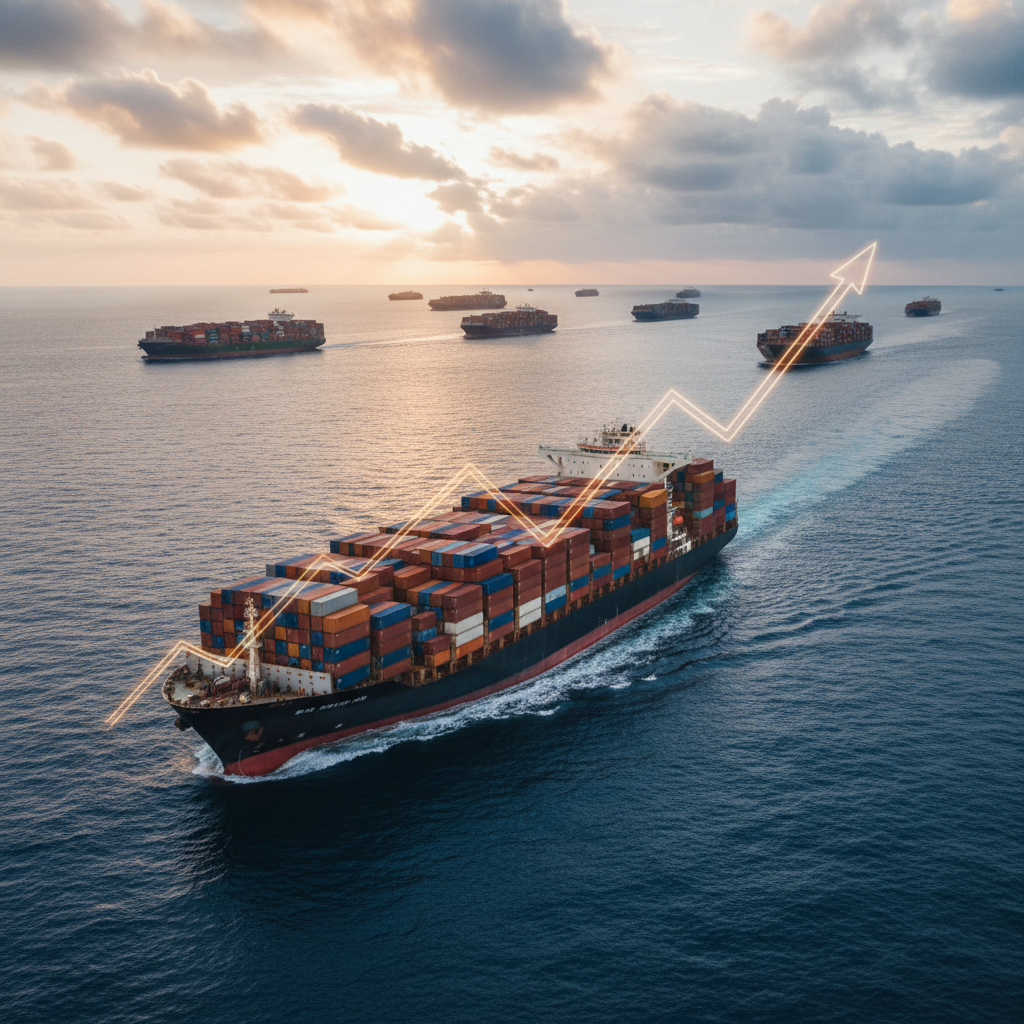
The current rally in container rates, with the SCFI up roughly 150% since late February, is significantly reshaping global supply-chain dynamics. Unlike previous assumptions of a short-lived anomaly, the sustained nature implied by the source suggests a more fundamental shift. For global flows, this means a constant re-evaluation of shipping strategies. Businesses may increasingly consider nearshoring or reshoring production to mitigate exorbitant long-haul freight costs. The increased cost pressure could also lead to a shift in inventory management, moving away from lean, just-in-time models towards more resilient, just-in-case approaches, requiring larger buffer stocks and thus more warehousing space.
Regarding routes, while direct route changes aren't explicitly driven by rates alone, the overall cost environment could incentivize carriers to prioritize more profitable lanes, potentially impacting service frequency or availability on less lucrative routes. Shippers might also explore multimodal alternatives or less conventional routes if cost differentials become substantial enough. Capacity, already strained, is further highlighted by container timecharter rates nearing cycle highs. This indicates a tight market where vessel availability is limited, making it harder for shippers to secure space and for carriers to easily add new services. This scarcity directly impacts lead times and the reliability of delivery schedules.
Operationally, businesses face heightened complexity. Procurement teams must contend with significantly higher landed costs for goods, impacting product pricing and profit margins. Logistics departments are under pressure to secure space, often at short notice and premium rates, while navigating potential delays and port congestion exacerbated by capacity constraints. The "more legs" aspect of this rally means these operational challenges are not temporary hurdles but ongoing conditions requiring strategic adaptation and robust contingency planning.
Global financial impact
The financial ramifications of the sustained container rate rally are profound, touching every stakeholder in global trade. For shippers, the immediate and most tangible impact is a dramatic increase in operational expenditure. With the SCFI surging approximately 150% since late February, the cost of moving goods has escalated sharply. This directly erodes profit margins, and in many cases, these increased costs will inevitably be passed on to consumers, contributing to inflationary pressures on a wide range of imported products. Businesses must now allocate a significantly larger portion of their budget to freight, potentially diverting funds from other critical areas like R&D or marketing.
Conversely, carriers and freight forwarders are experiencing a period of "sharply improved earnings." This windfall allows carriers to bolster their balance sheets, potentially invest in new vessels (though lead times are long), or improve existing infrastructure. However, the high timecharter rates also signify increased operational costs for carriers who lease a substantial portion of their fleet, indicating that while revenue is up, so are some input costs. For forwarders, the volatile market creates opportunities for margin capture through expert navigation of capacity and rate fluctuations, but also demands sophisticated market intelligence and strong carrier relationships.
At a broader trade level, these elevated shipping costs can act as a barrier to entry for smaller businesses and may alter global trade flows. Products with lower value-to-weight ratios become less viable for long-distance international trade. This could lead to a regionalization of supply chains, as companies seek to reduce transportation costs by sourcing closer to their end markets. The persistence of these high rates, as suggested by the "more legs" perspective, means that these financial pressures and shifts are likely to be structural rather than transient, requiring long-term strategic adjustments across the global economy.
How MGS can help navigate today's global trade environment
In an environment characterized by surging container rates and tight capacity, a shipment-visibility control tower like MGS becomes an indispensable tool for operators. The ability to track shipments in real-time is paramount when every dollar spent on freight is magnified by a 150% rate increase. MGS provides critical transparency, allowing businesses to monitor the exact location and status of their goods, from origin to destination. This visibility is not just about knowing where a container is; it's about proactively identifying potential delays, bottlenecks, or deviations that could incur additional costs like demurrage, detention, or expedited shipping fees, which are even more punitive at current rate levels.
Furthermore, MGS empowers proactive decision-making. When facing sustained high rates and uncertain transit times, the platform's insights enable logistics managers to respond swiftly to disruptions. For instance, if a vessel is significantly delayed, MGS data can facilitate rapid assessment of alternative transport modes or rerouting options to mitigate the impact on production schedules or customer commitments. This agility is crucial for avoiding costly stockouts or missed sales opportunities, which carry higher financial implications in a high-cost freight environment.
Beyond immediate crisis management, MGS contributes to strategic planning. By aggregating historical and real-time data on carrier performance, route efficiency, and cost variations, the platform provides a robust foundation for better forecasting and negotiation. Shippers can leverage MGS insights to understand the true total cost of their logistics, identify underperforming lanes or carriers, and enter future contract negotiations with data-backed leverage. This analytical capability is vital for optimizing supply chain resilience and ensuring cost-effectiveness, especially when the market signals that current high rates are likely to persist, demanding a long-term, data-driven approach to logistics management.
Demand–supply analysis & improvement
The current container rate rally, with the SCFI up roughly 150% since late February and 11% since mid-June, clearly indicates a significant imbalance between demand and supply within the global shipping market. The fact that container timecharter rates are near cycle highs further reinforces this, as carriers are willing to pay top dollar to secure vessels, suggesting that available capacity is struggling to keep pace with cargo volumes. The market's initial inclination to view this as a "one-off" repetition of 2021, contrasted with the title's assertion that it "has more legs," points to an underestimation of the underlying demand strength or the persistence of supply-side constraints. This isn't merely a temporary surge; it suggests structural factors are at play, driving sustained demand for shipping services against a backdrop of finite and inflexible supply.
To navigate this persistent imbalance, several improvement levers can be pulled. Firstly, enhanced demand forecasting and capacity planning are critical for shippers. By leveraging advanced analytics and historical data, businesses can better predict their shipping needs and secure capacity further in advance, potentially mitigating exposure to volatile spot rates. Secondly, diversification of sourcing and manufacturing locations can reduce reliance on specific, potentially congested, trade lanes. Distributing production across different regions can offer flexibility and reduce the impact of localized disruptions or rate spikes. Thirdly, optimizing load planning and container utilization becomes paramount. Maximizing the cargo within each container reduces the overall number of shipments required, thereby making more efficient use of scarce capacity. Finally, fostering strategic partnerships with carriers and forwarders can yield preferential access to capacity and more stable pricing, moving beyond transactional relationships to collaborative supply chain management.
ROI-focused resilience
The current container rate environment presents a clear and quantifiable risk to businesses, making investments in resilience strategies highly justifiable from an ROI perspective. The SCFI's approximate 150% increase since late February, and a further 11% since mid-June, directly translates into significantly higher landed costs for goods. This volatility underscores the financial exposure companies face when relying solely on spot market pricing or traditional, reactive logistics approaches.
Investing in a robust shipment-visibility control tower like MGS offers a tangible ROI by mitigating these quantified risks. For instance, avoiding a single instance of demurrage or detention, which can easily run into hundreds or thousands of dollars per container per day, particularly when base rates are already high, can quickly offset the platform's cost. MGS's ability to provide early warnings of delays allows for proactive decision-making, such as re-routing or coordinating alternative transport, thereby preventing costly production stoppages, lost sales due, or expedited shipping fees. The ROI is not just in cost avoidance but also in protecting revenue streams and maintaining customer satisfaction during periods of market volatility.
Furthermore, building strategic inventory buffers for critical components or finished goods, while incurring holding costs, can protect against the financial impact of sudden rate spikes or capacity shortages. The ROI here is measured by the avoidance of production line shutdowns or missed market opportunities, which could far outweigh the inventory carrying costs. Similarly, exploring long-term shipping contracts can provide rate stability and guaranteed capacity. While these contracts might not always offer the absolute lowest rate at every moment, their ROI lies in insulating a business from extreme spot market volatility, like the 150% surge observed, providing budget predictability and supply chain certainty in an otherwise unpredictable market. These investments are not merely expenses but strategic safeguards against significant, quantifiable financial risks.
Source: The Loadstar — https://theloadstar.com/container-rate-rally-has-more-legs-than-bears-assume/