
Automating the Future: How $69 Billion in Warehouse Investment Reshapes Global Supply Chains
The global warehouse automation market is set to soar to $69 billion by 2025, a massive leap from $29.6 billion in 2020. This significant investment is fundamentally altering supply chain dynamics, driving efficiency, and reshaping operational strategies. Discover how this transformation impacts global trade and how MGS provides critical visibility in this evolving landscape.
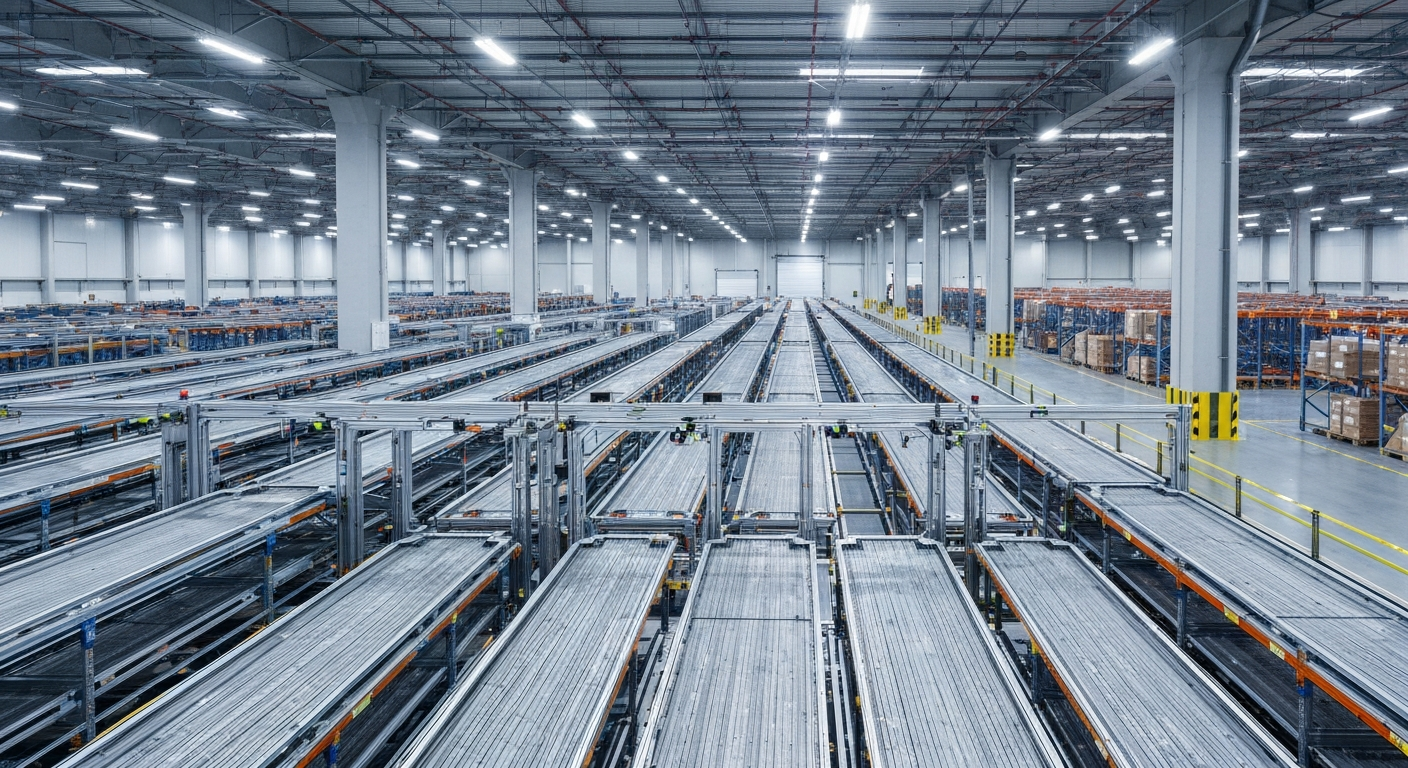
How this impacts the global supply chain
The global warehouse automation market's projected growth from $29.6 billion in 2020 to $69 billion by 2025 signifies a fundamental shift in global supply chain dynamics. This substantial investment directly impacts flows, routes, capacity, and operations.
Automation dramatically accelerates internal warehouse flows. Technologies like Automated Storage and Retrieval Systems (AS/RS) and robotics reduce dwell times, enabling faster order fulfillment and increasing overall supply chain velocity. Goods move more swiftly from inbound receiving to outbound shipping, a critical factor for modern logistics.
This efficiency influences routes and network design. Higher throughput in automated facilities can lead to more centralized distribution or, conversely, enable hyper-local micro-fulfillment, altering traditional freight lanes. Companies can optimize their network strategy based on enhanced internal processing power.
Automation significantly boosts effective capacity. By utilizing vertical space more efficiently and operating 24/7, automated systems handle greater volumes per square foot than manual operations. This addresses labor shortages and allows for scalable processing of peak demand, making existing infrastructure more productive.
Finally, warehouse operations are redefined. The shift from manual, labor-intensive tasks to technology-driven processes leads to fewer errors, improved inventory accuracy, and greater predictability. Workforce roles evolve towards system oversight and data analysis, transforming the warehouse into a highly efficient, strategic asset capable of driving competitive advantage through superior service.
Global financial impact
The projected growth of the warehouse automation market to $69 billion by 2025 from $29.6 billion in 2020 carries significant financial implications for all stakeholders in global trade.
For shippers, the initial capital outlay for automation is substantial, driving the market's expansion. However, this investment yields significant long-term operational savings. Reduced labor costs, fewer errors, and optimized space utilization directly lower unit costs and inventory carrying expenses. Faster, more accurate fulfillment also enhances customer satisfaction, potentially boosting sales and market share, impacting top-line revenue.
Carriers benefit from improved efficiency at automated facilities. More predictable and faster truck turnaround times at loading docks reduce vehicle dwell times, optimizing asset utilization and driver efficiency. This can lead to lower operational costs per mile and more consistent scheduling, creating a smoother ecosystem for freight movement.
For trade at large, this massive investment signals a global drive towards greater economic efficiency. Nations and businesses embracing automation gain a competitive edge by offering faster, more reliable, and cost-effective supply chains. This can attract investment, stimulate economic growth, and foster more sustainable trade practices through reduced waste and improved resource utilization. The market's expansion itself creates a new economic sector, driving innovation and high-tech employment.
How MGS can help navigate today's global trade environment
Even as warehouse automation soars to $69 billion by 2025, optimizing internal processes is only half the battle. A shipment-visibility control tower like MGS becomes critical for navigating the external complexities of global trade, especially at the crucial handoff points.
MGS provides end-to-end, real-time visibility that extends beyond the automated facility. By integrating with Warehouse Management Systems (WMS) or Yard Management Systems (YMS), MGS offers granular insight into when inbound shipments are expected at automated docks or when outbound goods are ready for pickup. This ensures seamless coordination between highly efficient internal operations and external logistics.
Furthermore, MGS enhances operational responsiveness through predictive Estimated Times of Arrival (ETAs). It combines the internal readiness of automated goods with real-time external transit data, offering a holistic, accurate forecast. This predictive capability enables proactive decision-making, allowing businesses to adjust schedules or inform customers, mitigating the ripple effects of external disruptions that automation alone cannot address.
Optimizing carrier handoffs is another key area. With automated warehouses preparing shipments rapidly, MGS provides the intelligence to orchestrate precise carrier appointments. Knowing exact pickup times minimizes truck idle time and demurrage, ensuring the efficiency gained within the automated warehouse translates directly into efficient transportation. MGS ensures that the substantial investment in automation delivers tangible, end-to-end supply chain excellence.
Demand–supply analysis & improvement
The projected growth of the global warehouse automation market from $29.6 billion in 2020 to $69 billion by 2025 clearly illustrates robust demand and a maturing supply landscape.
On the demand side, this surge is driven by the relentless growth of e-commerce, requiring faster, more accurate fulfillment of complex orders. Persistent labor shortages and rising wage costs make manual operations unsustainable, pushing companies towards automated solutions. The need for greater supply chain resilience against disruptions also fuels this demand, as automation offers consistency and scalability.
The supply side is responding vigorously. The market expansion indicates a healthy ecosystem of automation providers, from AS/RS specialists to robotics companies offering Autonomous Mobile Robots (AMRs) and robotic picking arms. This competition fosters innovation, making solutions more accessible and adaptable for a wider range of businesses.
For improvement, companies must strategically identify automation investments that address their specific bottlenecks, moving beyond mere technology acquisition to integrated system optimization. Workforce reskilling is paramount, shifting human roles to system management and data analysis. Crucially, robust data integration between automated warehouse systems and broader supply chain platforms (like MGS) is essential to leverage internal efficiencies across the entire network.
ROI-focused resilience
The significant growth of the global warehouse automation market to $69 billion by 2025 from $29.6 billion in 2020 is a strategic investment in resilience, driven by a clear ROI against quantified supply chain risks.
Automation mitigates labor dependency and volatility. Investment in robotics protects against potential lost sales due to workforce shortages or escalating labor costs, ensuring operational continuity even during labor constraints. The ROI is derived from avoiding these quantifiable financial losses.
It also enhances resilience against demand volatility and peak season surges. Automated systems scale efficiently to handle unpredictable order spikes, capturing revenue that would otherwise be lost due to capacity limitations. This investment protects against the quantified risk of lost market share and damaged brand reputation from unfulfilled orders during high-demand periods.
Furthermore, automation reduces operational errors and inventory inaccuracies. By minimizing mis-picks and discrepancies, it cuts costs associated with rework, reverse logistics, and lost sales. The ROI is quantifiable through reduced error correction expenses and improved customer satisfaction.
Ultimately, automation contributes to resilience against extended lead times and slow response to disruptions. Faster internal processing reduces overall lead times, improving cash flow and agility. The investment protects against the quantified risk of holding excessive safety stock or losing competitive advantage due to sluggish response times. This market growth underscores businesses' recognition of these risks, making automation a compelling, ROI-driven strategy for building robust supply chains.
Source: Interact Analysis — https://interactanalysis.com/warehouse-automation-market-to-expand-to-over-69bn-by-2025/