
Material Transportation Automation: A Strategic Imperative Reshaping Global Supply Chains
The escalating investment in material transportation automation signifies a pivotal shift in global supply chain strategy. This brief explores the profound impact of this trend on operational flows, financial landscapes, and how advanced visibility platforms like MGS are essential for navigating this automated future.
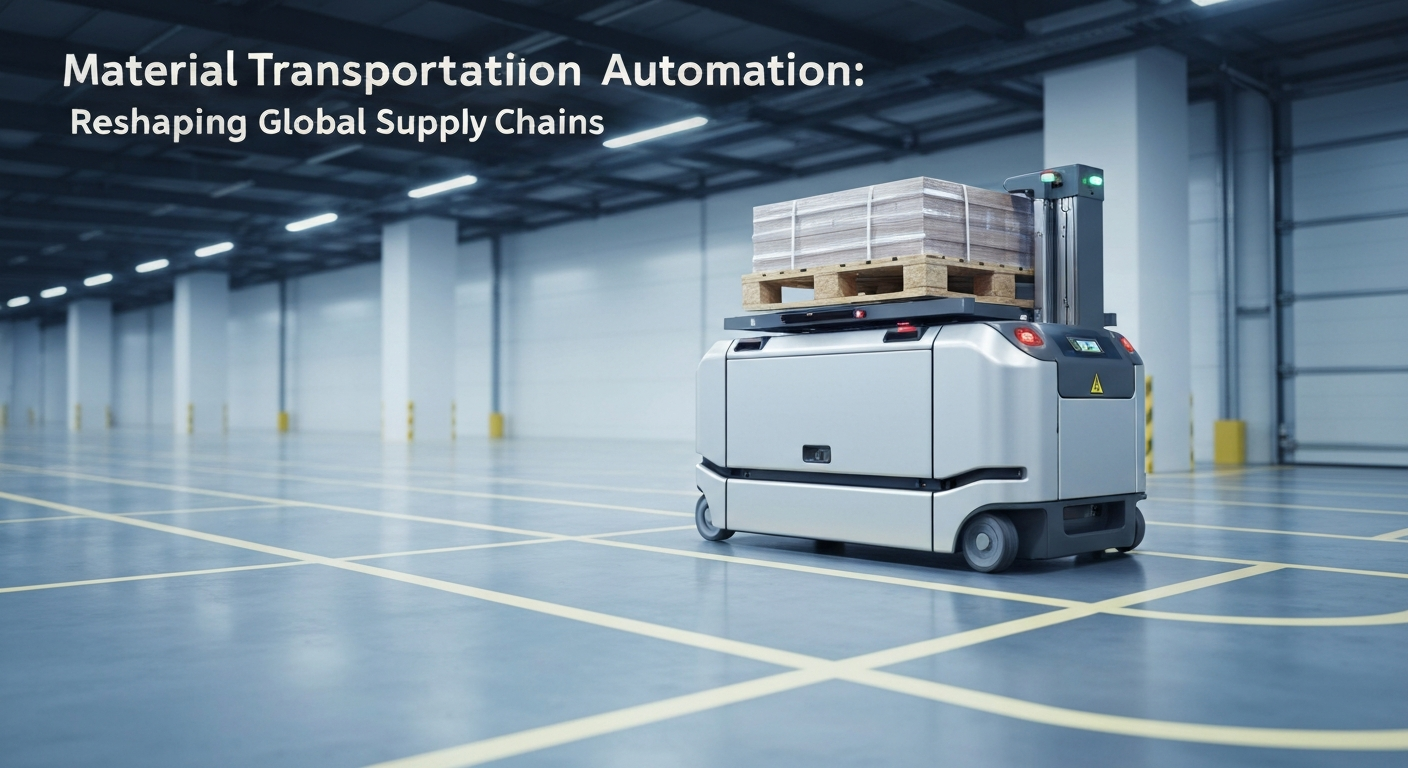
How this impacts the global supply chain
The accelerating investment in material transportation automation, identified as a top strategic priority in 2026, is fundamentally reshaping global supply chains. This shift profoundly impacts how goods move, are stored, and are processed across the network.
Firstly, flows are becoming significantly more streamlined and predictable. Automation, through technologies like AGVs, AMRs, and advanced conveyor systems, minimizes human intervention, reduces errors, and dramatically accelerates throughput within warehouses, distribution centers, and port facilities. This efficiency at critical transit points translates into faster processing for international shipments, ultimately shortening lead times and improving the overall velocity of goods globally.
Regarding routes, automation primarily optimizes internal logistics pathways. Intelligent systems dynamically plan the most efficient movement of materials within facilities, reducing congestion. While not directly altering global shipping lanes, this internal efficiency enables tighter scheduling for external transportation, allowing carriers to maintain more precise timetables. Reduced dwell times at ports and terminals due to automated loading and unloading can indirectly free up capacity on major shipping routes by accelerating vessel turnaround.
Capacity utilization is substantially enhanced. Automation facilitates 24/7 operations, reduces idle times, and optimizes storage density through systems like AS/RS. This effectively expands the operational capacity of existing infrastructure without requiring physical expansion, crucial for global trade navigating high demand or constrained resources. It allows supply chains to absorb larger volumes and respond more flexibly to market fluctuations.
Finally, operations are undergoing a fundamental restructuring. Reliance on manual labor for repetitive tasks diminishes, shifting the workforce towards monitoring, maintenance, and strategic oversight of automated systems. This bolsters operational resilience against labor shortages or disruptions, leading to fewer damaged goods, improved inventory accuracy, and a higher quality of service, all critical for competitive advantage in the global marketplace.
Global financial impact
The increasing investment in material transportation automation carries significant financial and cost implications for all participants in global trade: shippers, carriers, and the broader economy.
For shippers, the initial Capital Expenditure (CapEx) for automation technologies, which is notably increasing in 2026, can be substantial. However, this upfront investment is justified by significant long-term operational savings. Shippers can expect substantial reductions in labor costs, fewer errors, less damage, and associated rework. Improved inventory accuracy and faster throughput lead to lower inventory holding costs and optimized working capital. The enhanced reliability and speed can also translate into improved customer satisfaction and potentially higher sales, boosting revenue and overall profitability.
Carriers also benefit from the ripple effects of widespread automation. As logistics hubs automate material handling, carriers experience faster turnaround times at loading docks, warehouses, and terminals. This efficiency means their assets—trucks, trains, ships—spend less time waiting and more time in transit, leading to better asset utilization and increased revenue potential per asset. Reduced dwell times can also lower fuel consumption from idling and decrease demurrage charges. Automation contributes to safer environments, potentially leading to fewer accidents and lower insurance premiums. The increased predictability helps carriers optimize scheduling and resource allocation more effectively.
For trade at large, the widespread adoption of automation can lead to a more efficient and cost-effective global exchange of goods. By reducing operational friction and logistics costs, automation contributes to lower prices for consumers and increased competitiveness for businesses engaged in international trade. It facilitates easier market entry by standardizing handling processes and improving reliability. While there may be initial economic adjustments related to labor, the long-term impact is expected to foster economic growth by making supply chains more robust, responsive, and less susceptible to disruptions.
How MGS can help navigate today's global trade environment
While material transportation automation promises significant internal efficiencies, the global trade environment remains inherently complex and prone to external disruptions. This is precisely where a sophisticated shipment-visibility control tower like MGS becomes an indispensable tool, complementing and enhancing the benefits of automation.
Automation excels at optimizing processes within a facility or along a controlled internal route. However, goods still traverse vast, unpredictable global networks involving multiple carriers, customs, and geographical challenges. MGS provides the crucial bridge, offering end-to-end, real-time visibility into the entire journey of a shipment, connecting automated origins to automated destinations and every manual or semi-automated leg in between.
Consider an automated warehouse efficiently processing an outbound shipment. Without external visibility, this perfectly prepared shipment could face unforeseen delays at a congested port or a customs bottleneck. MGS provides predictive insights into these potential disruptions, allowing operators to proactively adjust their automated internal processes. For instance, if a vessel is delayed, the automated system can be instructed to hold off on preparing subsequent shipments, optimizing internal staging areas.
Conversely, for inbound shipments, MGS provides precise estimated times of arrival (ETAs) even for goods moving through complex multimodal routes. This real-time data allows automated receiving docks and internal material handling systems to be perfectly synchronized for arrival, minimizing dwell times and maximizing throughput. An automated system can be pre-programmed to handle a specific incoming container based on MGS's advanced shipment notification, ensuring seamless offloading and routing within the facility.
MGS also plays a critical role in exception management. When a disruption occurs—a port strike, a natural disaster, or a carrier delay—MGS immediately flags affected shipments. This allows operators to quickly assess the impact, communicate with stakeholders, and implement contingency plans. For instance, an automated system might need to reroute specific inventory, and MGS would provide the necessary visibility to track the new path and ensure the automated receiving end is prepared. MGS ensures that the significant investment in automation is fully leveraged by connecting internal efficiency gains with the realities of global trade.
Demand–supply analysis & improvement
The Interact Analysis report clearly indicates a robust and accelerating demand for material transportation automation solutions. The fact that automation investment is increasing and has become a “top strategic priority” in 2026 underscores a widespread recognition among businesses that these technologies are essential for competitive advantage and operational survival. This demand is driven by the persistent need for cost reduction, greater operational efficiency, enhanced reliability, and ongoing challenges of labor availability and cost.
On the supply side, the market for automation technologies is evidently responding to this burgeoning demand, as evidenced by the increasing capital expenditure. Technology providers, integrators, and equipment manufacturers are investing in research, development, and scaling their production and service capabilities to meet market needs. This indicates a healthy, albeit competitive, ecosystem of innovation and deployment.
To further improve this dynamic and ensure the benefits of automation are fully realized, several improvement levers can be activated:
- Standardization and Interoperability: As more disparate automated systems are deployed, common standards and protocols are needed to ensure seamless communication and integration between different vendors' equipment and software, reducing implementation complexities.
- Scalability and Flexibility: Automation solutions must be adaptable to businesses of varying sizes and operational complexities. Modular and scalable systems that can grow with a company’s needs, and the ability to reconfigure systems quickly, are crucial for broader adoption.
- Workforce Reskilling and Upskilling: The shift to automation necessitates investment in human capital. Training programs for existing employees to manage, maintain, and troubleshoot automated systems, alongside developing new skills in data analytics and robotics, are vital to maximize ROI.
- Data-Driven Optimization: Automation generates vast amounts of operational data. Leveraging this data through advanced analytics and AI can lead to continuous process improvement and predictive maintenance. Platforms like MGS can integrate this data with broader shipment information for holistic insights.
- Ecosystem Collaboration: Greater collaboration between automation technology providers, logistics service providers, and end-users can foster innovative solutions that address specific industry challenges and accelerate adoption.
ROI-focused resilience
The strategic prioritization of material transportation automation, coupled with increasing CapEx, strongly implies that businesses are viewing these investments through an ROI-focused lens, particularly concerning resilience. The drive to make automation a “top strategic priority” often stems from a need to mitigate significant risks and ensure business continuity in an unpredictable environment. Automation, in this context, offers a quantifiable return on investment by protecting against various operational and financial risks.
The investment in automation can be framed as a premium paid to insure against several critical vulnerabilities:
- Labor Shortage and Cost Volatility Risk: Automation significantly reduces reliance on manual labor for repetitive tasks. The ROI is derived from mitigating the risk of labor shortages (e.g., during pandemics or peak seasons), reducing the impact of rising labor costs, and avoiding disruptions due to labor disputes. The quantified risk is the potential loss of productivity, increased overtime expenses, or operational shutdowns.
- Operational Inefficiency and Error Risk: Manual processes are prone to human error, leading to mispicks, damaged goods, and safety incidents. Automation drastically reduces these errors, leading to fewer returns, less waste, lower insurance claims, and improved customer satisfaction. The ROI is calculated by comparing the cost of automation to the financial losses incurred from errors, damages, and associated rework or reputational damage.
- Throughput and Bottleneck Risk: In periods of high demand, manual operations can become bottlenecks, leading to delays and missed delivery windows. Automated systems can maintain consistent throughput 24/7, scaling operations more effectively to meet fluctuating demand. The ROI is in preventing lost sales due to inability to meet demand, avoiding penalties for late deliveries, and maintaining market share through reliable service.
- Supply Chain Disruption Absorption: While automation primarily addresses internal resilience, a highly efficient and predictable internal logistics operation can better absorb and recover from external supply chain shocks. For instance, if a critical inbound shipment is delayed, an automated warehouse can quickly reconfigure priorities and process alternative goods without significant manual intervention, minimizing cascading impact. The ROI here is the reduced financial impact and faster recovery time from unforeseen external events.
By investing in automation, businesses are not just seeking efficiency gains but are strategically fortifying their operations against a spectrum of risks that could otherwise lead to substantial financial losses, operational paralysis, or erosion of market trust. The “strategic priority” designation implies that the quantified benefits of this resilience outweigh the significant CapEx, making it a sound financial decision for long-term stability and growth.
Source: Interact Analysis — https://interactanalysis.com/material-transportation-automation-investment-increases/